Media has made drones scary, but they can be useful tools to many industries, such as agriculture.
Drones give farmers a better ability to see problems and target various treatments, as opposed to blanket solutions. Since these are open source, farmers can collaborate on uses. Because farmers aren’t corporations, like big Ag, they’re allowed to use drone technology.
Different crops have differing sensor needs. These inexpensive farm drones can be quickly & easily modified to suit the crop or the aspect of it they wish to monitor. This kind of efficiency will help smaller farmers compete with big Ag.
The value of fixing it

This was a different presentation than I expected. I thought it would be about fixing your own appliances, but Sean Riley is the host of a show I’ve been missing on National Geographic, World’s Toughest Fixes. In the vein of Dirty Jobs, WTF focuses on the folks who fix the things we depend on when they break.
Today, he highlighted the dwindling numbers of youth entering vital trades, such as plumbing. He points out that skilled tradesfolk can make a higher wage than many college grads, mostly because of the intensive complicated training.
Tradesfolk are by no means dumb. Math & science are just as important as to them as to college hopefuls. A trade is just more hands on.
Alas, he’s not making a 4th season, so I’ll probably turn to Netflix for prior seasons.
Stout ice cream
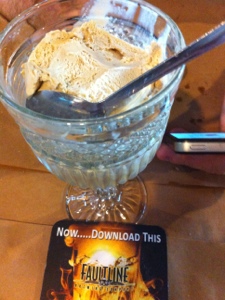
Dulce de leche w/ a stout finish
Faultline Seafood Gumbo
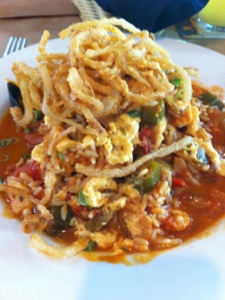
Thieves’ Salad at Thai Chili

Magnetic Bumper stickers
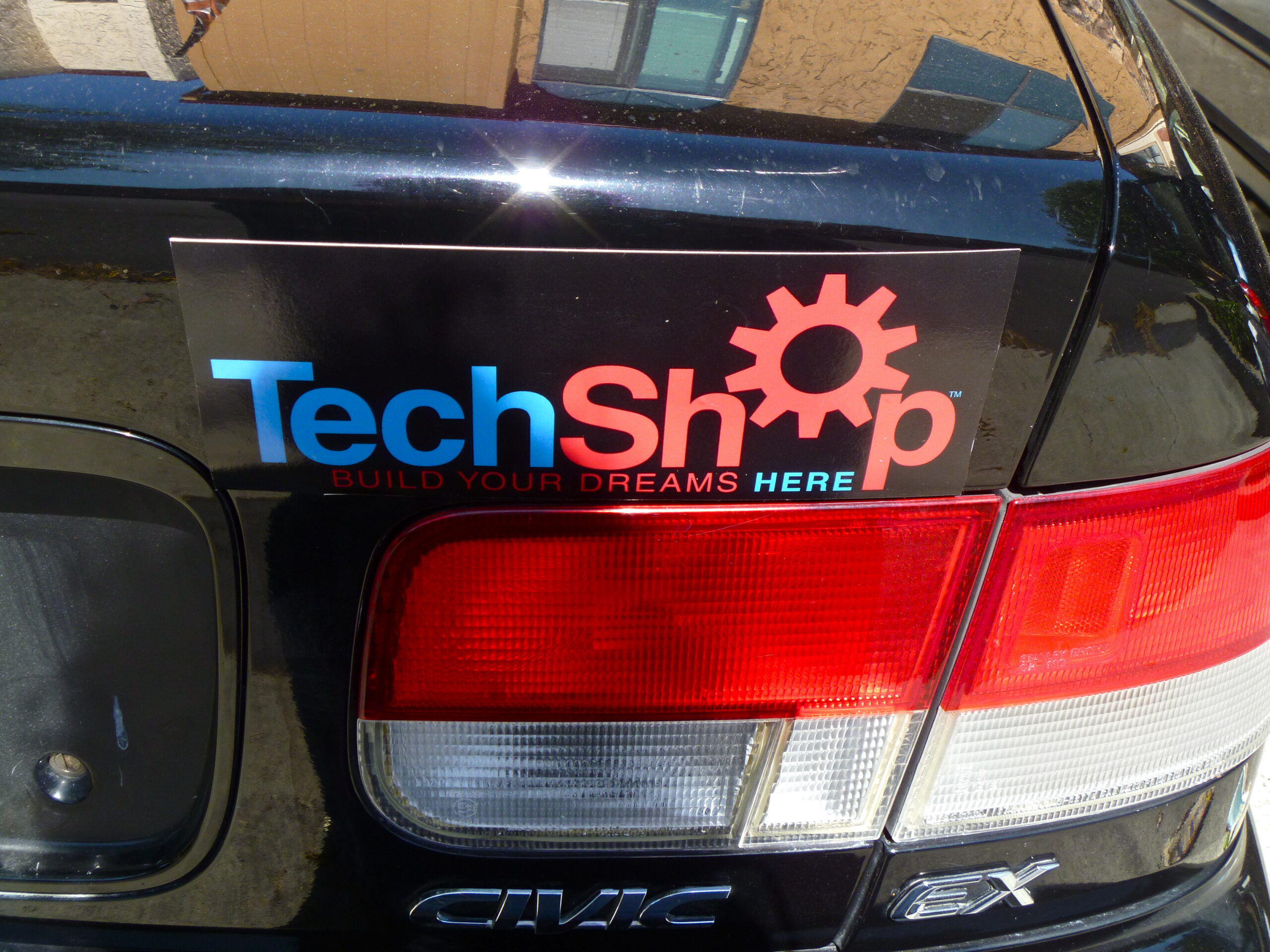
Bumper stickers are a fun media for expressing your thoughts or offering support for causes or products. Magnetizing bumper stickers gives you the freedom to change the placement, rotate through favorites, and/or have your stickers safe from destruction at the car wash. Sheet magnets can be found at places like TAP Plastic, or in printer-friendly sizes at office supply stores and some dollar stores, such as Daiso.
Materials
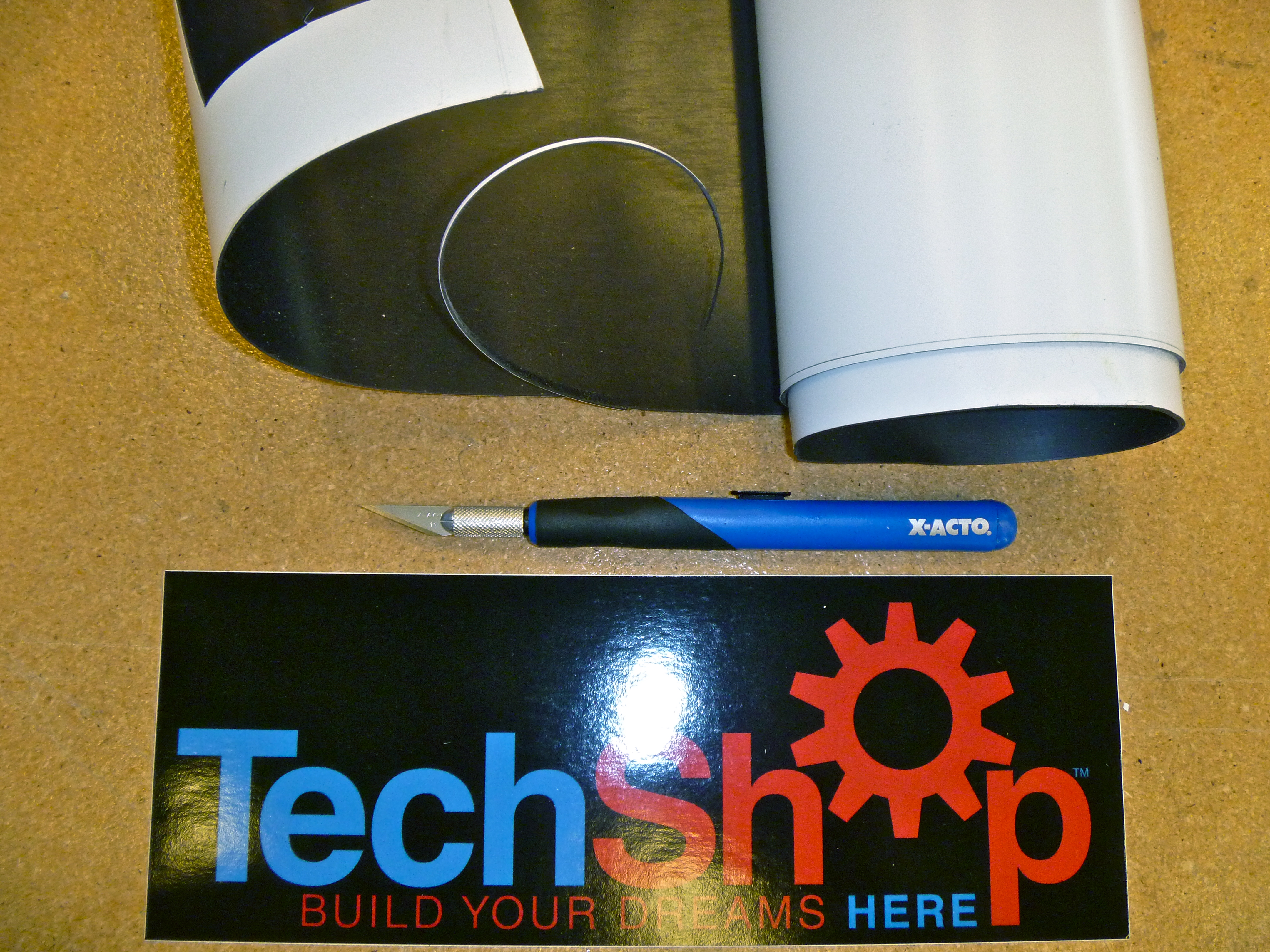
bumper sticker
sheet magnet
craft knife
1. Peel the backing from the bumper sticker.
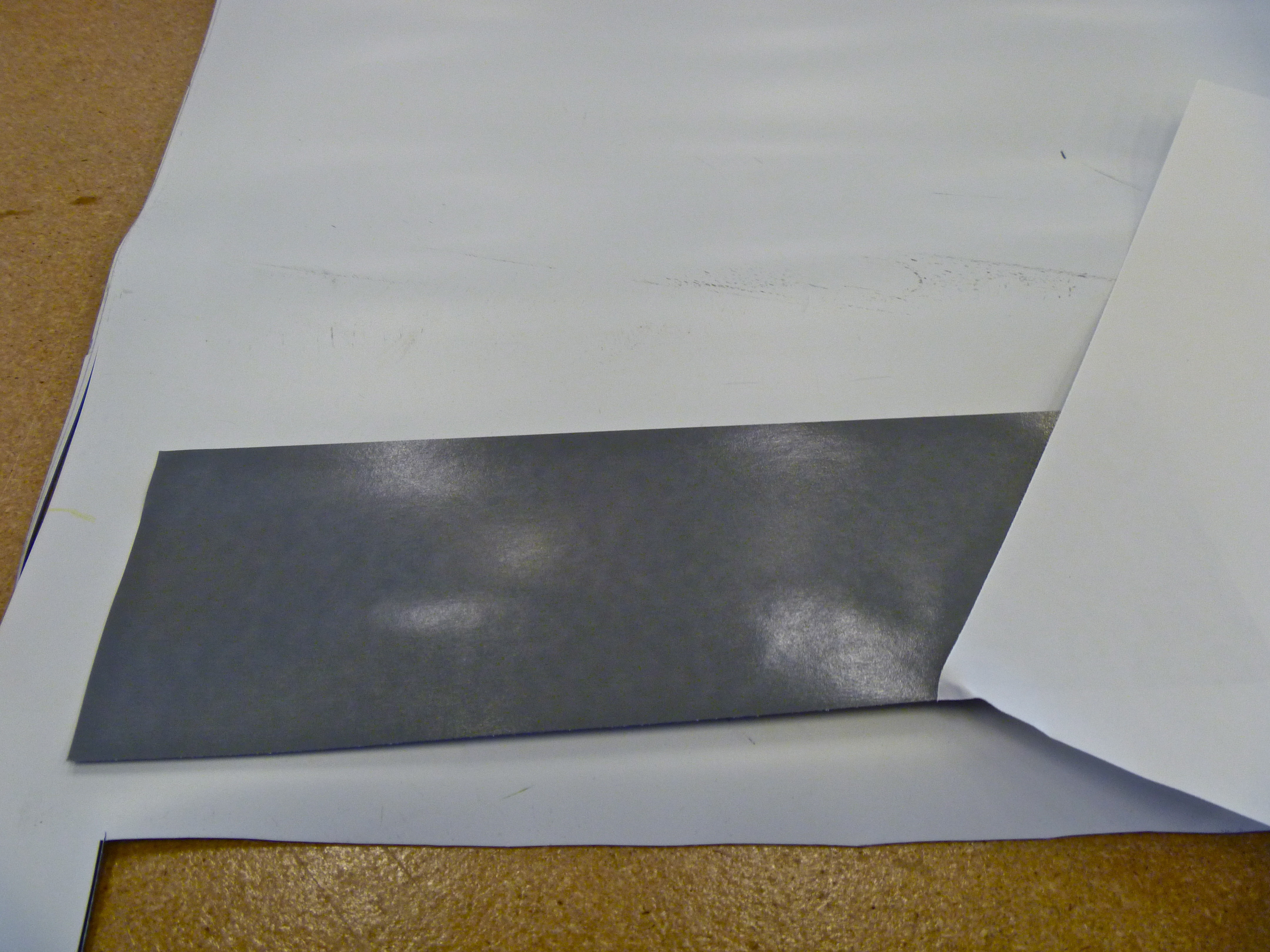
2. Adhere the sticker to the sheet magnet.
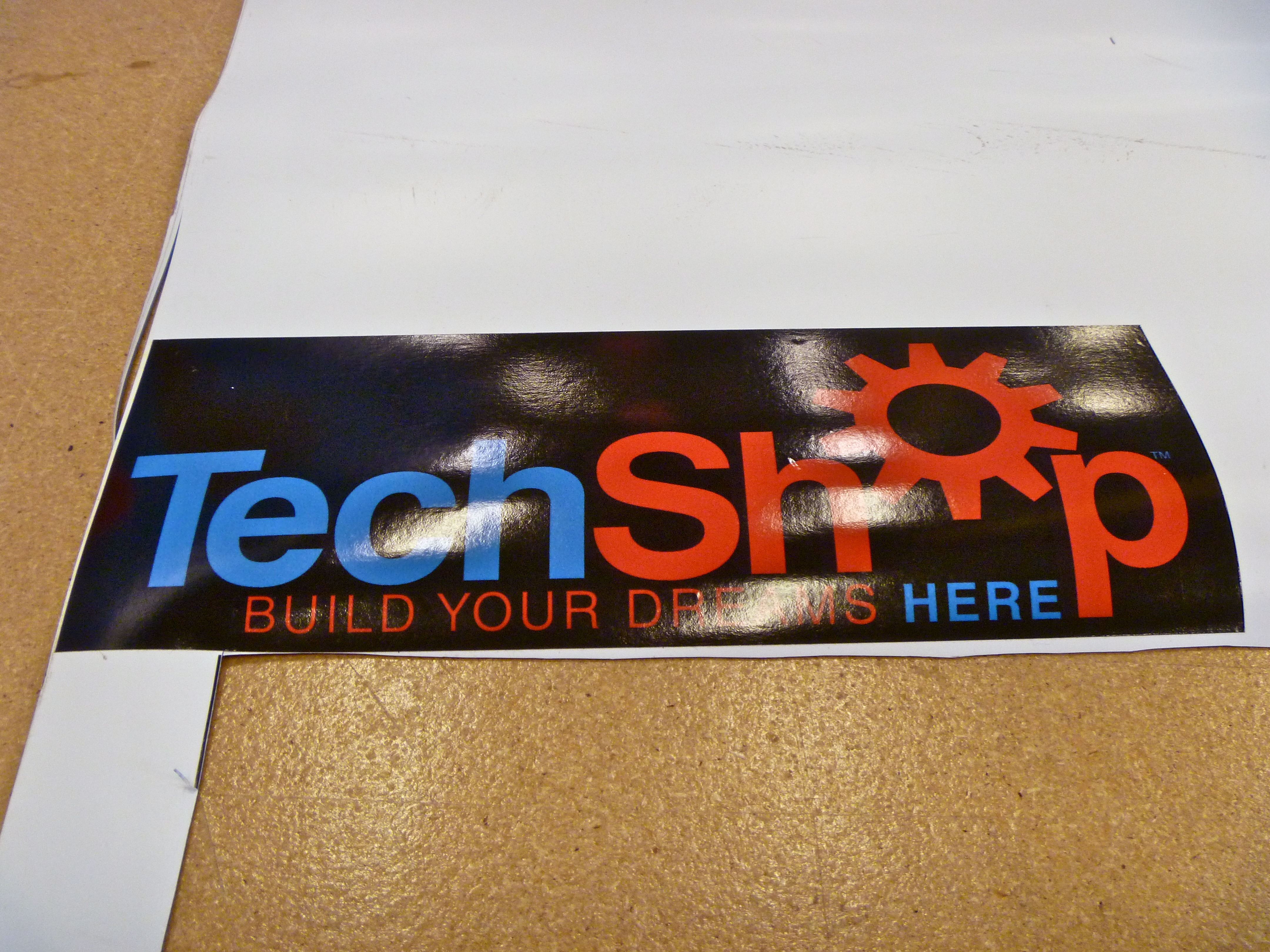
3. Use the craft knife to score around the edges of the sticker.
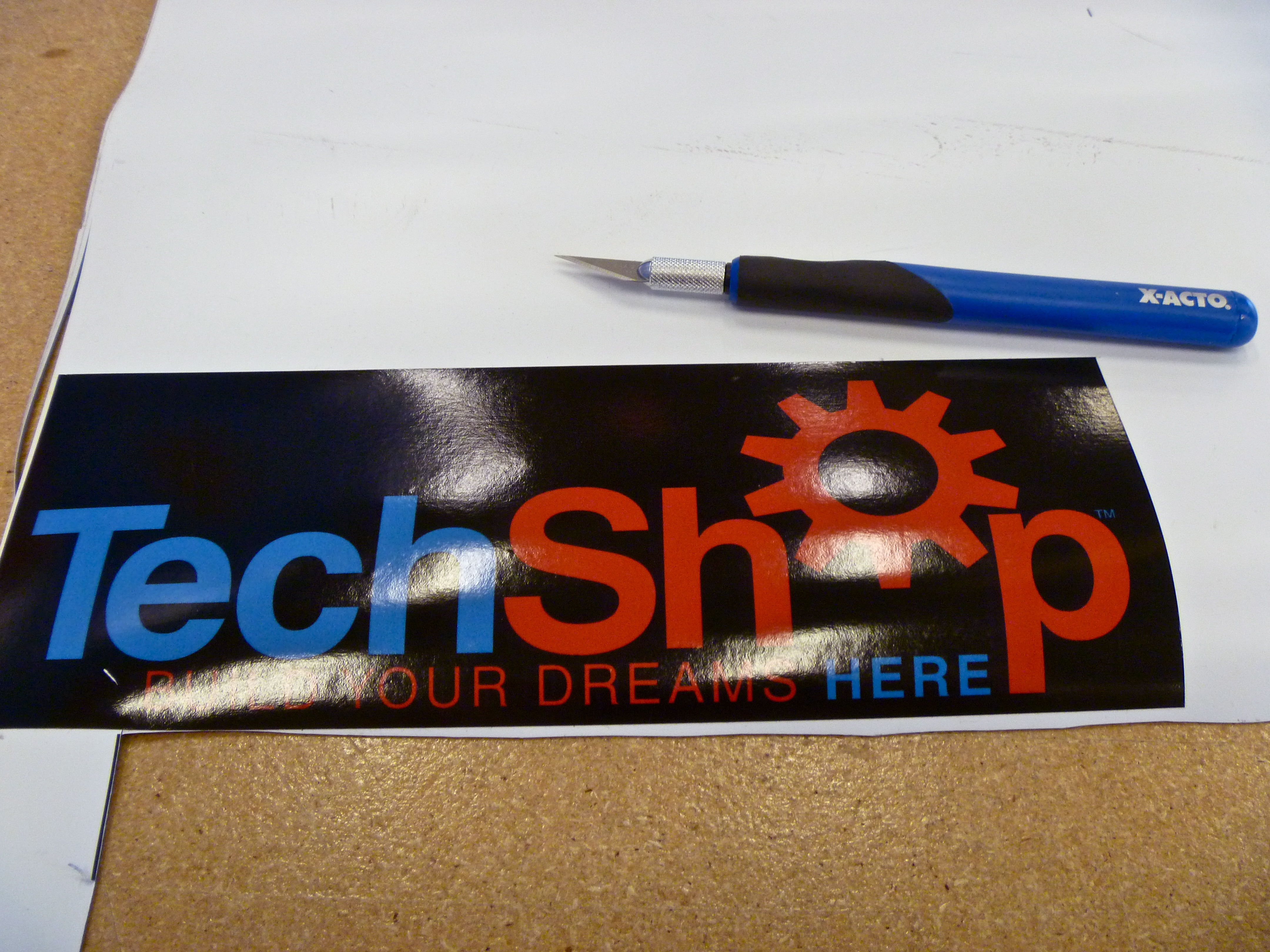
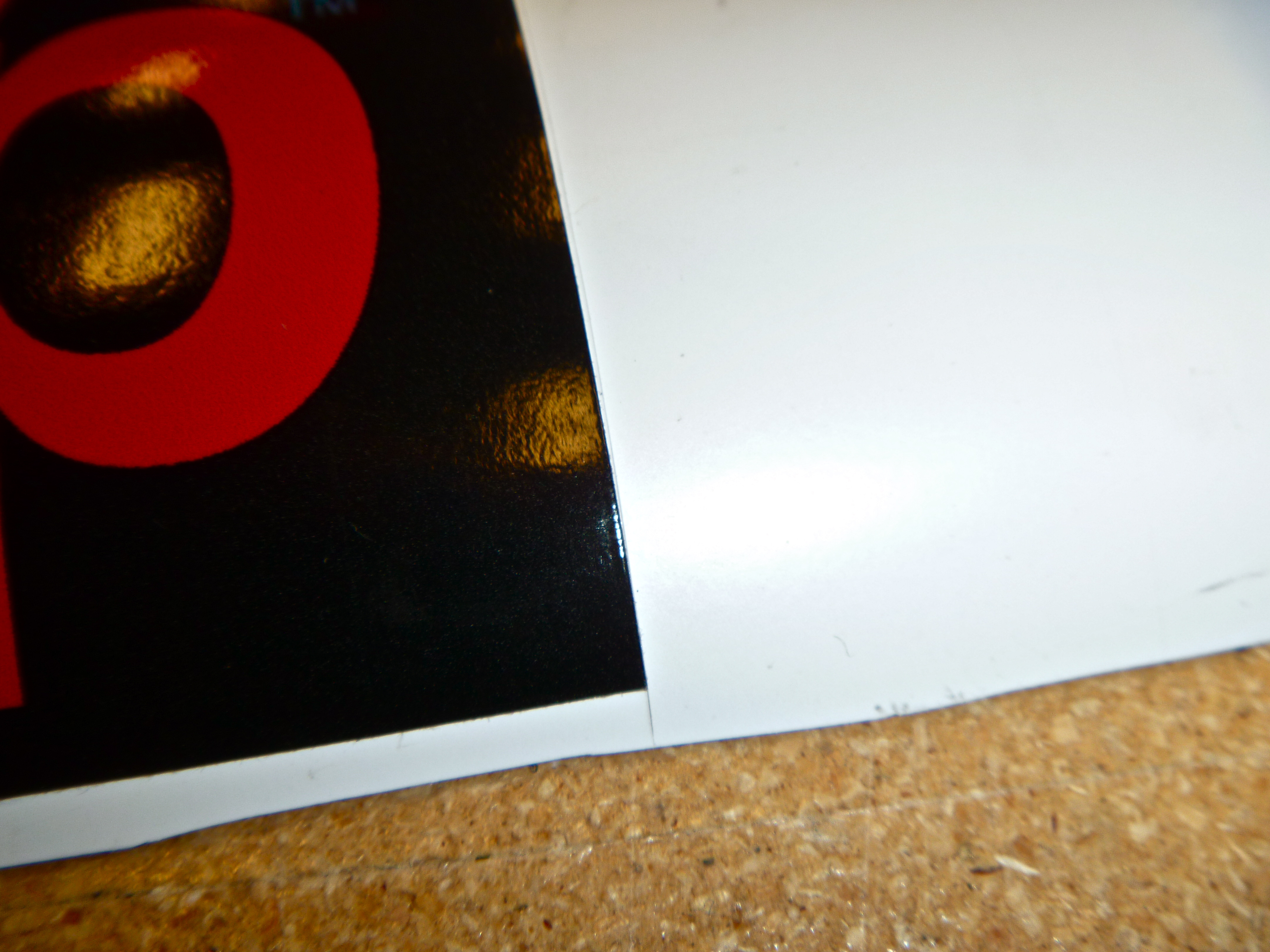
4. Crease the sheet magnet along the scores to snap it apart.
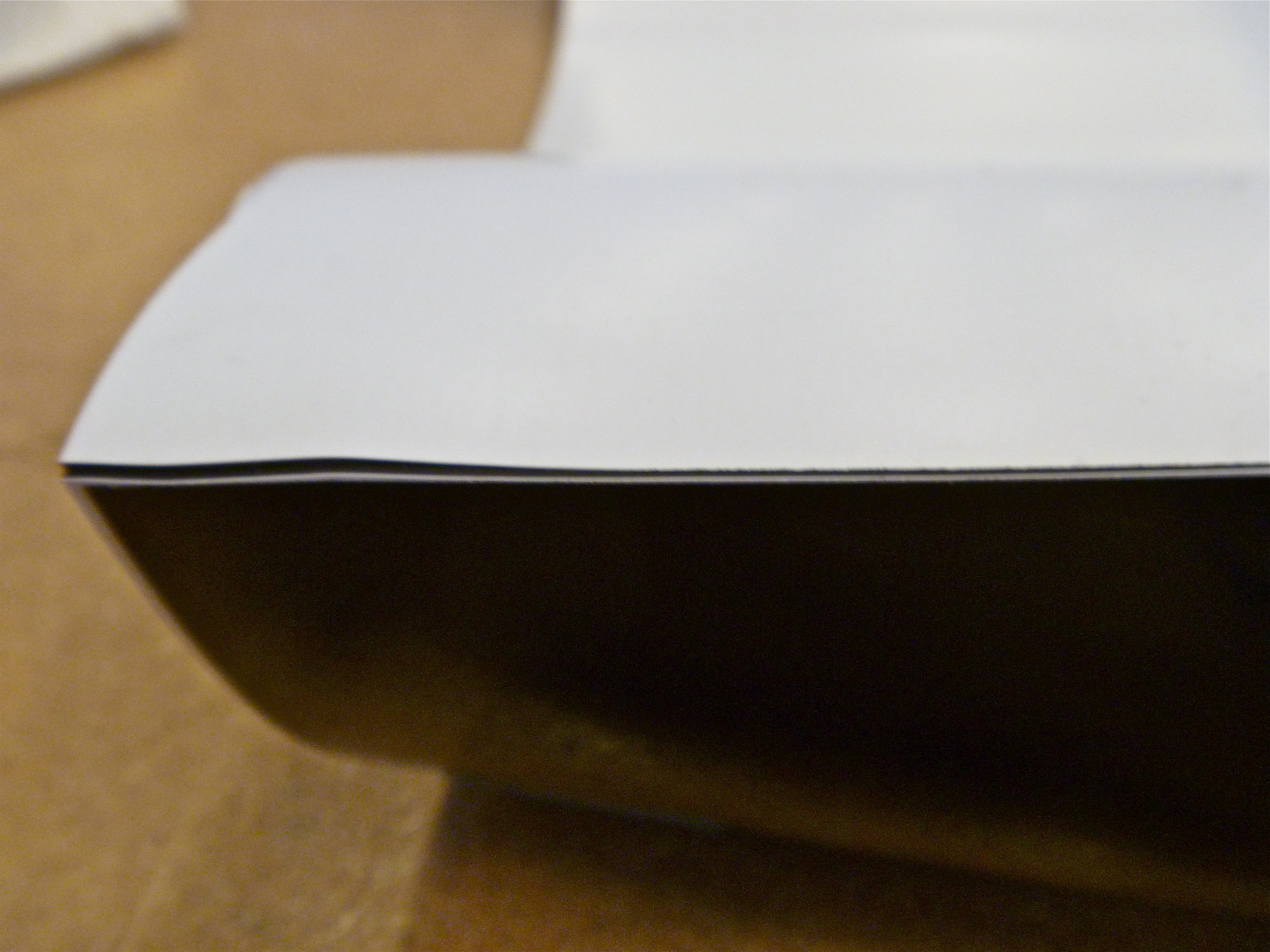
5. Use the craft knife on any stubborn areas, and to clean up any rough edges.
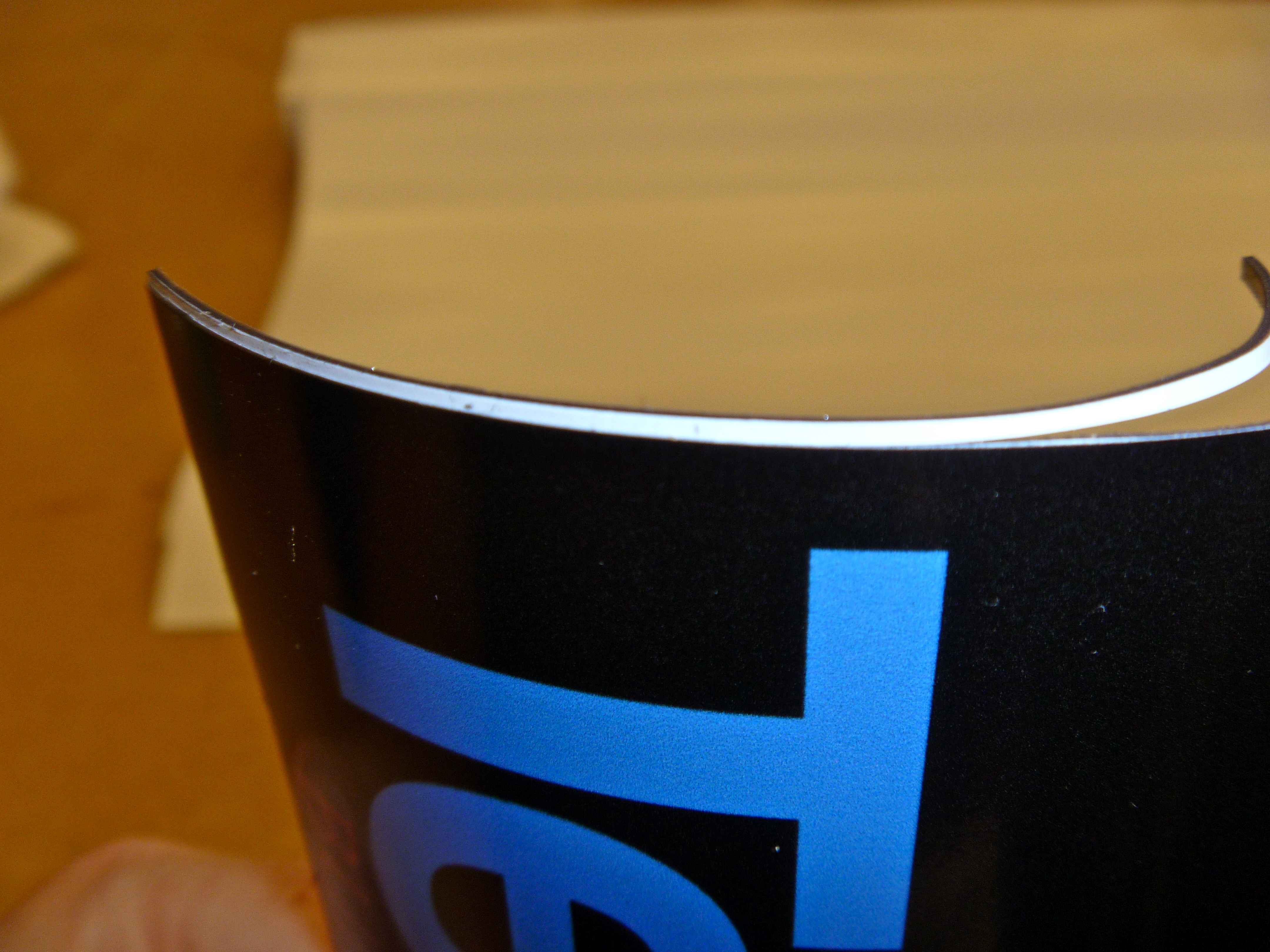
6. Place the sticker on any magnetic surface. Annoyingly, the bumpers on most modern cars are not magnetic, but the back of the car is.
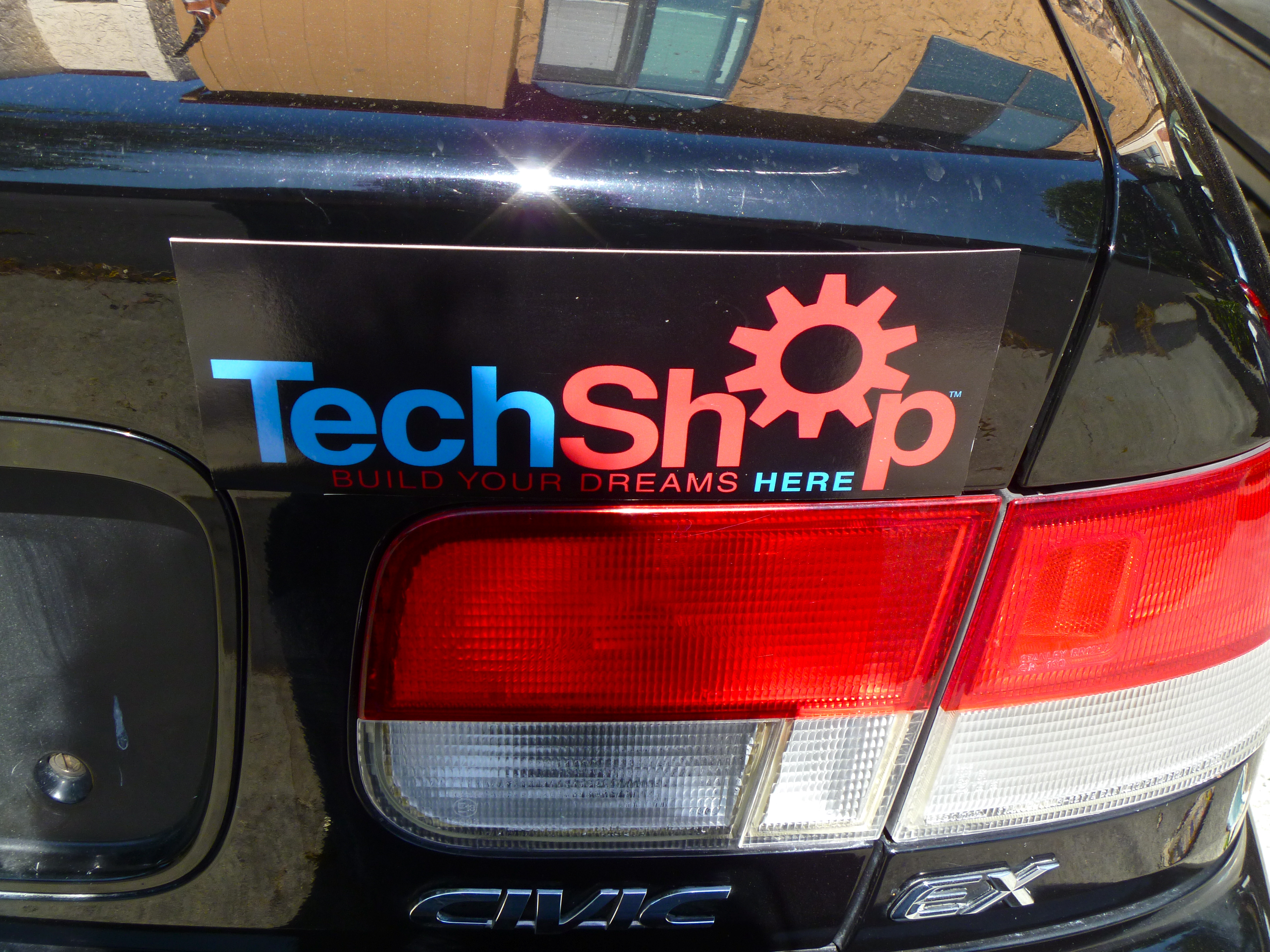
Viola!
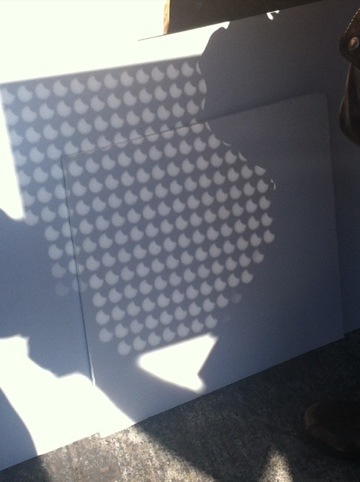
Partial eclipse today
Wearable Computing
The panel at Maker Faire consisted of three wearable computing innovators, and their mentor, Lynne Bruning. Each maker used different techniques for their projects, and each project went a different direction.
Ally Seeley‘s project was the most serious and the most elegant. She’s turned toward using tiny electronics into a glove, and later, perhaps other tools, to help people with nerve damage perceive touch sensations through sight. She made an elegant gauntlet, and plans to work on other tools in the future.
Nik’s project for middle school involved an army-style camo jacket, dubbed the Hacket, and several electronics elements, including electro-luminescent (EL) wire. The heart on his chest glowed on or off with the touch of a switch. He says eventually it’ll be upgraded to pulse with the wearer’s heartbeat. Stars on his back pulse with the intensity of the surrounding sound. Most subtle, and most clever, he had a sensor hidden in the back yoke of the jacket, that when pressed in a hug, triggered a cheerful song in his front pocket.
Matt Pinner‘s creations were the most flamboyant. He wore a cute unicorn costume with socks and horn lit up by strings of LCDs. A friend modeled his Sith lord robe with “lightening” sleeves. He started as an electronic engineer, but turned his skills toward creating whimsical, wearable art with an electronic component.
The short Q & A session afterwards allowed the audience to get answers to both practical and aesthetic problems.
Did I mention that it’s hot?
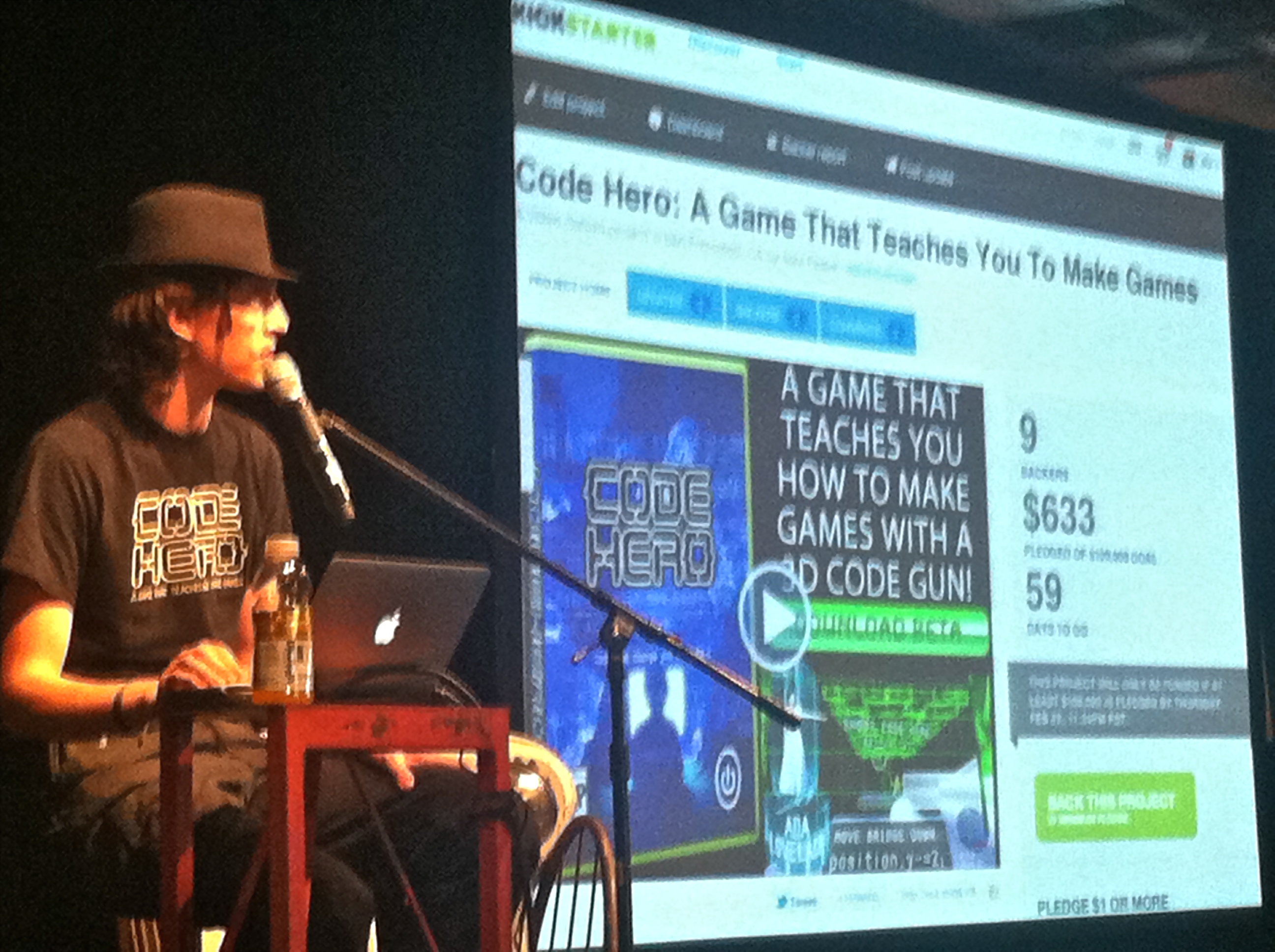
Code Is Literacy: Code Hero
I was warned that the Code Is Literacy people are fanatics, but I attended this session to hear about the intriguing-sounding game, Code Hero. However, the at least the first third of the presentation was a summary of the CIL tenets. When Alex Peake finally got around to describing the game, there was no time afterwards for Q & A.
Code Hero itself looks promising, although it probably needs more tweeking. It feels a bit like Portal, although not as witty. Your code ray allows you to affect your environment starting in simple ways, but then increases in complexity. I wonder if the transition is smooth enough because the demonstration jumped from simple lines to full debugger page fairly quickly. It felt a bit overwhelming, but could have seemed that way simply from the pace of the presentation.
The goal of the game is to allow you to create and program your own video games. I hope that skill will transfer to other computer applications, as well.